
 By fitnessteam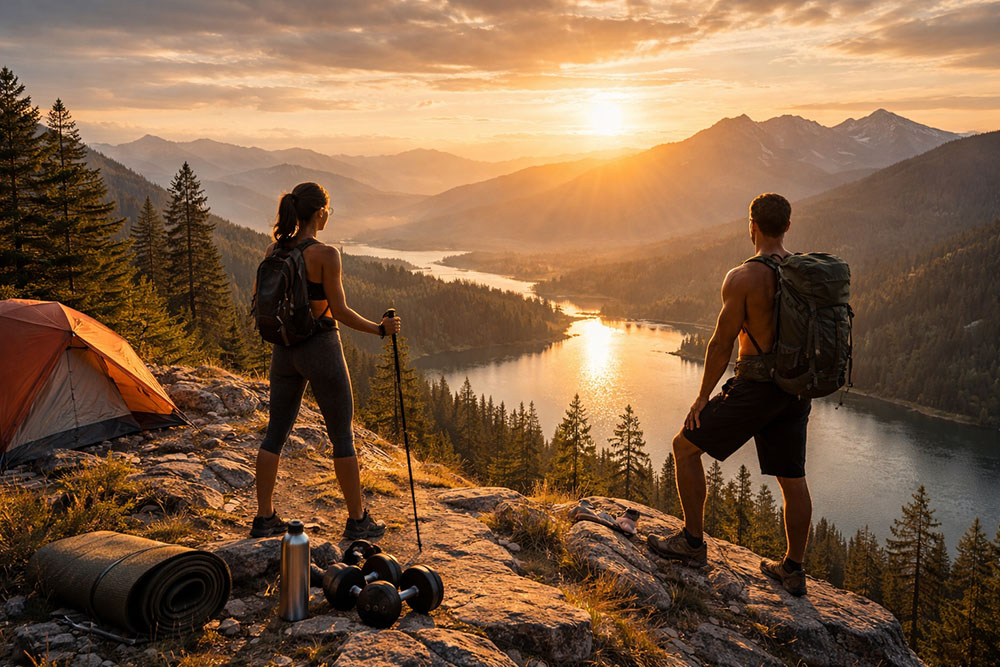
There was a time when travel was an act of survival. Our ancestors moved because they had to—following herds, seasons, and water. Movement was life. In the 21st century, we have engineered comfort so successfully that motion is optional. Yet paradoxically, we now pay for movement: gym memberships, fitness retreats, hiking tours, marathon registrations in cities we’ve never lived in. What changed is not our biology, but our context. Health, travel, and fitness have become intertwined not out of necessity, but out of intention.
At its core, fitness is simply the body’s ability to meet the demands placed upon it. Travel, too, is a form of demand—unpredictable terrain, new time zones, unfamiliar cuisines, altered sleep cycles. When we travel, we test our adaptability. The airport becomes a laboratory of human endurance: circadian rhythms disrupted, hydration challenged, immune systems negotiating new microbial environments. The body responds as it always has—by adapting.
Scientific literature confirms what ancient migration already knew: movement enhances health. Regular aerobic activity improves cardiovascular efficiency, reduces systemic inflammation, and enhances insulin sensitivity. Resistance training strengthens not only muscle fibers but bone density, crucial in preventing osteoporosis. Meanwhile, moderate physical activity boosts neuroplasticity—the brain’s ability to form new connections. Now consider travel. Exposure to novel environments stimulates cognitive flexibility, creativity, and stress resilience. Studies suggest that navigating new places engages the hippocampus, the brain region associated with memory and spatial orientation. Fitness strengthens the body; travel sharpens the mind. Together, they sculpt a more resilient human.
The synergy becomes even more compelling when we look at stress physiology. Chronic stress elevates cortisol, impairing immunity and increasing abdominal fat deposition. Yet physical exercise modulates cortisol rhythms and enhances the release of endorphins. Travel, particularly nature-based travel, reduces stress markers as well. Forest bathing in Japan—Shinrin-yoku—has been shown to lower blood pressure and decrease cortisol levels. Hiking through alpine landscapes or swimming in coastal waters offers more than aesthetic pleasure; it recalibrates the nervous system.
Modern travel has evolved beyond sightseeing into experiential health journeys. Wellness tourism is one of the fastest-growing sectors of global travel, valued in the hundreds of billions of dollars. From yoga retreats in Bali to high-altitude trekking in Patagonia, travelers are seeking transformation rather than simple escape. They are no longer content with postcards; they want physiological change. The sunrise run in a foreign city becomes a ritual of belonging. The hotel gym becomes a bridge between home identity and global mobility.
Yet there is nuance here. Travel can undermine health if approached unconsciously. Jet lag disrupts melatonin production, affecting sleep quality and metabolic regulation. Irregular meals rich in sodium and sugar can negate fitness gains. The romantic notion of indulgence—desserts at every meal, cocktails at sunset—often collides with the body’s need for consistency. Thus, the art lies in integration, not extremes.
The healthiest travelers are not those who rigidly adhere to routines but those who adapt intelligently. They walk through cities instead of relying solely on transport. They choose local markets over ultra-processed convenience food. They hydrate consciously during long flights. They use travel as an opportunity to diversify movement patterns—swimming in the ocean, cycling through vineyards, climbing ancient staircases worn smooth by centuries. This diversity challenges the body in multidimensional ways, improving proprioception, balance, and muscular coordination.
Interestingly, travel can reignite dormant fitness motivation. Environmental psychology suggests that new surroundings disrupt habitual patterns, creating “fresh start effects.” A person who struggles to maintain exercise routines at home may find it easier to rise early for a jog when overlooking the Mediterranean or the skyline of Tokyo. Novelty reactivates curiosity, and curiosity fuels consistency.
There is also a social dimension. Group hikes, destination races, surf camps—these experiences create community bonds. Shared physical challenge fosters oxytocin release, strengthening social trust. Longevity research consistently highlights the importance of social connection as a predictor of health outcomes. In this way, travel and fitness converge not only biologically but socially.
However, the conversation must include sustainability. The carbon footprint of frequent travel cannot be ignored. True health is not individual alone; it is ecological. Walking tours, cycling holidays, and locally focused trips reduce environmental strain while amplifying physical engagement. The future of healthy travel may depend on slower, more immersive journeys rather than rapid, high-consumption itineraries.
Ultimately, health is not a static state but a dynamic equilibrium. Travel destabilizes routine; fitness restores equilibrium. Together, they create a cycle of stress and recovery—the same principle that builds muscle. When we climb mountains, literal or metaphorical, micro-tears form in our muscles. With rest and nourishment, they rebuild stronger. When we step into unfamiliar cultures, our assumptions are challenged. With reflection, we emerge broader in perspective.
The human organism evolved for movement across landscapes. Air-conditioned offices and algorithmic entertainment have narrowed our daily range of motion to a few square meters. Travel re-expands that radius. Fitness ensures we can meet it with vitality. Health is the result of this dance—between effort and rest, novelty and familiarity, solitude and community.
Perhaps the deepest insight is this: health, travel, and fitness are not separate pursuits but expressions of the same instinct—the desire to explore. To explore the body’s limits. To explore the world’s diversity. To explore the edges of our own resilience.
When we carry our bodies across continents with strength and awareness, we are not escaping life; we are participating in it more fully. The passport becomes kinetic. The journey becomes metabolic. And health ceases to be a goal on a checklist—it becomes the lived experience of movement through the world.